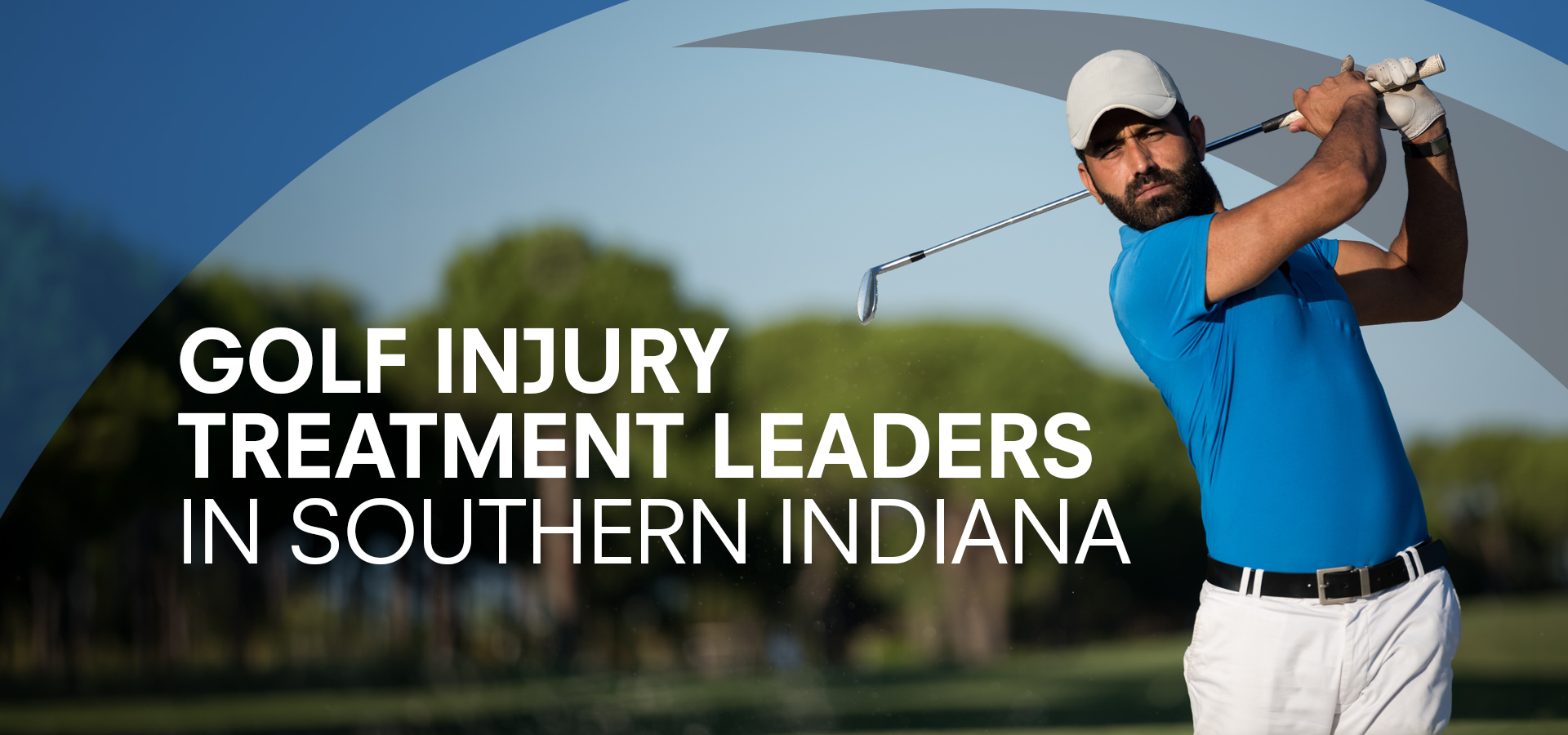
For golfers at every level, staying healthy and moving comfortably can make a difference in your game. Southern Indiana Orthopedics provides specialized bone, joint, and muscle care to help golfers overcome injuries and continue doing what they enjoy.
Golf challenges the body in ways that may not always be obvious. Repeated swinging, rotating, and walking can place significant demands on the back, shoulders, elbows, hips, knees, wrists, and feet. Over time, these stresses can contribute to pain, overuse injuries, or other conditions that interfere with your swing and your time on the course.
At Southern Indiana Orthopedics, our doctors understand how golf-related injuries can affect both movement and performance. We provide comprehensive evaluation and treatment for a wide range of orthopedic conditions, with care tailored to each golfer's symptoms, activity level, and goals.
From determining the source of your pain to developing a treatment and recovery plan, our team is committed to helping you move comfortably, regain function, and return to the course with confidence.


Proud to be part of the elite national group The Golf Docs, our experts at Southern Indiana Orthopedics offer invaluable insights into injury prevention and performance enhancement. As a part of The Golf Docs, we are dedicated to assisting you in achieving peak performance on the course.
Preparing for Golf & Preventing Injury
A successful round starts before you step onto the first tee. Because the golf swing requires coordinated movement throughout the body, flexibility, strength, balance, and mobility all play an important role in helping you move efficiently.
Regular conditioning can help prepare your muscles and joints for the physical demands of golf. Taking time to warm up before playing can also help loosen the body and prepare it for the repeated movements involved in a round.
Try incorporating the following exercises into your routine to support mobility, stability, and overall golf fitness.

Injury Prevention Exercises
Exercise 1
TORSO ROTATION STRETCH
1. Stand upright with your feet shoulder-width apart and your arms crossed over your chest.
2. Slowly rotate your upper body to one side while keeping your hips facing forward.
3. Continue until you feel a gentle stretch through your torso and lower back.
4. Hold for 15 to 20 seconds.
5. Repeat on the opposite side.
Exercise 2
SIDE PLANK
1. Begin by lying on your side with your elbow positioned directly under your shoulder and your legs extended.
2. Lift your hips off the ground, creating a straight line from your head to your feet.
3. Keep your core engaged and avoid letting your hips drop.
4. Hold for 20 to 40 seconds, then switch sides.
Exercise 3
HIP ROTATION
1. Lie on your side, knees bent, arms forward.
2. Open top arm and rotate chest.
3. Hold for 10 to 15 seconds, then repeat on the other side.
Exercise 4
WRIST FLEXOR STRETCH
1. Extend one arm straight in front of you with your palm facing upward.
2. Use your opposite hand to gently pull your fingers downward toward the floor.
3. Continue until you feel a stretch along your forearm.
4. Hold for 20 to 30 seconds.
5. Switch arms and repeat.
Exercise 5
SQUATS
1. Stand with your feet shoulder-width apart and your toes pointed slightly outward.
2. Lower your body by bending your knees and pushing your hips back while keeping your chest upright.
3. Keep your weight through your heels as you descend.
4. Push through your heels to return to a standing position.
5. Repeat for 10 to 15 repetitions.
Who to See
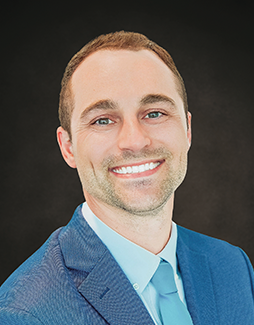
Kalen Farr, D.P.M.
Dr. Kalen Farr is a podiatrist specializing in foot and ankle care, with advanced training in podiatric surgery and reconstructive procedures. He is dedicated to helping patients regain mobility, reduce pain, and return to the activities they enjoy through personalized, evidence-based treatment plans.
Who to See
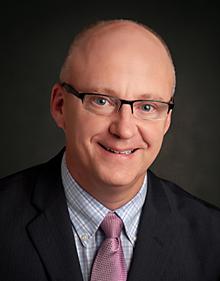
Douglas J. Federle, M.D., M.S.
Dr. Douglas J. Federle's interest in orthopedics began while completing his undergraduate degree in mechanical engineering at the University of Cincinnati.
Through the university's cooperative education program, he was employed by Ethicon Endosurgery and participated in surgical instrument design. This ultimately led to his choice of orthopedic surgery as a career, the perfect blend of medicine and engineering.
Who to See
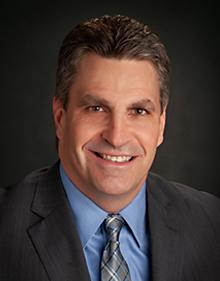
Cary M. Guse, M.D.
Born and raised in Wanatah, a small northwest Indiana farming town, Dr. Cary Guse was the first in his family to attend college. A four-sport athlete and class valedictorian in high school, he continued his scholastic and athletic endeavors while attending Franklin College, participating in both basketball and baseball and receiving the prestigious Ben Franklin Distinguished Scholar award. He went on to graduate summa cum laude while graduating first in his class.
Who to See
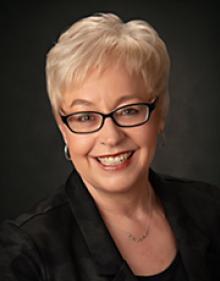
Lisa Lanham, D.P.M.
Dr. Lisa Lanham chose to follow in both her father's and grandfather's footsteps as a third-generation podiatrist. Dr. Lanham graduated from Indiana University in 1986 and the California School of Podiatric Medicine in 1990, now called Samuel Merritt University.
Postgraduate training included a surgical residency at Pacific Hospital of Long Beach, clinical rotations with an osteopathic teaching institution, pediatric experience, and a surgical fellowship at Tustin Hospital in Tustin, CA.
Who to See
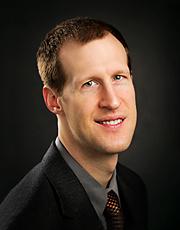
Matthew E. Lovell, M.D.
Dr. Lovell is a specialist in orthopedic surgery, treating patients in Columbus, Seymour, and North Vernon. He specializes in minimally invasive surgery of the hip, knee, and shoulder. Dr. Lovell offers advanced surgical techniques that allow his patients to get back to the activities that they enjoy as fast as possible. Dr. Lovell avoids the use of surgical staples or sutures that have to be removed, allowing for a smaller scar and improved patient satisfaction.
Dr. Lovell's expertise includes:
Who to See
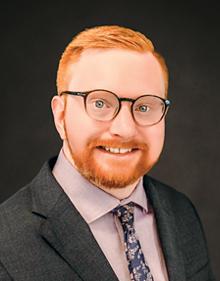
Robert B. Middleton, D.P.M.
Born and raised in Kentucky, Dr. Robert Middleton is a podiatrist specializing in care for the foot and ankle. He provides his patients with advanced surgical techniques and procedures to help them get back to moving the way they should.
Dr. Middleton believes that a strong patient-doctor bond is paramount in achieving positive outcomes. He takes the time to listen and get to know his patients, ensuring that together they formulate appropriate treatment plans that are tailored to help reach their goals.
Who to See
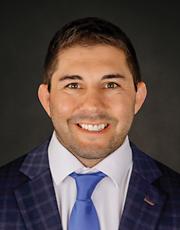
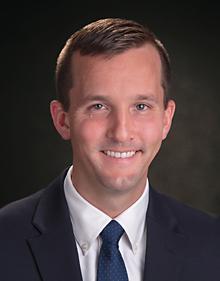
Eric P. Tannenbaum, M.D.
Dr. Eric Tannenbaum is a fellowship-trained, board-certified orthopedic surgeon specializing in total joint replacement surgery, hip preservation, and sports medicine. He offers the most current and advanced surgical techniques to his patients including anterior total hip replacement and custom total shoulder replacement with 3D-printed patient-specific guides.
Who to See
Sean M. Wilson, M.D.
Born and raised in Indiana, Dr. Sean Wilson is a board-certified, fellowship-trained orthopedic surgeon, specializing in sports medicine, total joint replacement surgery, and trauma surgery. He offers his patients the most current and advanced surgical techniques, including reverse total shoulder replacement, arthroscopic procedures, and ACL reconstruction to help them overcome pain, weakness, or instability to get back to the things that give their lives purpose and meaning.
He believes that you can only expect a good outcome if the care and treatment provided is both personal and personalized, and that is central to everything he does.
When to Be Seen
Playing through persistent pain can do more than make a round uncomfortable. Continuing to golf with an untreated injury may aggravate the problem, alter the way you move, and potentially lead to a longer recovery.
An evaluation can help determine what is causing your symptoms and what type of treatment may be appropriate. Seeking care when pain or limited movement begins interfering with your game can help you address the problem before it keeps you away from the course.

Consider scheduling an appointment if you experience:
- Pain that continues during or after playing golf
- Difficulty rotating, bending, walking, or completing your normal swing
- Pain or stiffness that does not improve with rest or at-home care
- Sudden or sharp pain in the back, shoulder, elbow, hip, knee, wrist, hand, or foot
- Weakness, instability, or reduced movement that affects your game
Common golf-related injuries and conditions include:
- Golfer's elbow and other elbow conditions
- Rotator cuff injuries and shoulder pain
- Back strains and other spine-related conditions
- Wrist and hand injuries
- Hip and knee pain
- Foot and ankle conditions
- Tendinitis, muscle strains, and other overuse injuries
Comprehensive Care for Golf Injuries
At Southern Indiana Orthopedics, care begins with understanding your injury, your activity level, and what you want to get back to doing. Our doctors offer both nonsurgical and surgical treatment options and develop individualized care plans based on each patient's needs.
When appropriate, treatment may include physical therapy, activity modification, rehabilitation, or other conservative options. If surgery is needed, our surgeons use advanced techniques designed to restore function and support recovery.
From your initial evaluation through your return to activity, the golf injury experts at Southern Indiana Orthopedics are here to help you recover and get back to enjoying your game.